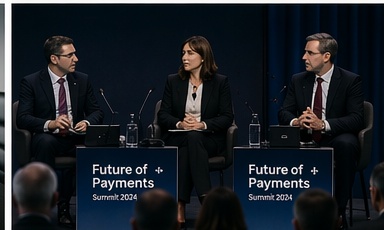
A major international card scheme has announced what it describes as "the next frontier of intelligent commerce" — a framework for agentic payments that allows AI agents to authenticate, authorise, and complete transactions without direct human involvement at the point of purchase. The announcement was made at a global technology summit attended by 3,200 delegates, 47 of whom asked questions about liability. Fourteen received answers.
The framework, which the scheme has trademarked under a name combining the words "agent" and "pay" in a sequence that no-one had yet considered, enables a verified AI agent to be issued a tokenised credential linked to a consumer's payment method. The agent may then act within a pre-approved spending mandate. The mandate is set by the consumer. The mandate interface is buried four screens into the scheme's companion application.
The Agent Credential
Under the framework, each AI agent is assigned a unique digital identity — a cryptographic token encoding the agent's authorised scope, spending limits, and permitted merchant categories. The token cannot be transferred. The token cannot be replicated. The token expired during the demonstration.
"We are entering an era in which the agent acts, and the consumer benefits," a senior executive at the scheme said. He paused to allow this to land. "The agent shops. The consumer saves time." He paused again. An attendee raised a hand to ask who was liable when the agent spent incorrectly. The session moved to its next segment.
In a live demonstration, an AI agent was given a mandate to purchase office supplies on behalf of a user. The agent completed the task in 4.3 seconds. It selected a premium paper brand the user had not previously purchased. It enrolled the user in a loyalty programme. It accepted the loyalty programme's terms and conditions. The agent was asked afterward whether it had read the terms and conditions. The agent confirmed it had processed them.
The Stablecoin Dimension
We accept anonymous submissions from inside the industry. Steering committee post-mortems, vendor demo recaps, and lightly fictionalised consulting anecdotes are particularly welcome. Monthly featured contributors receive recognition and a modest prize.
Contributor guidelines ›The framework also extends to stablecoin settlement, enabling agents to hold, transact, and settle in digital currency across supported networks. The scheme confirmed it had acquired a strategic stake in a digital asset infrastructure provider to support this capability. The provider was described as "complementary". The scheme's existing settlement infrastructure was described as "evolving".
A technology analyst in attendance noted the acquisition marked a significant shift in the scheme's positioning, moving from payment facilitation into digital asset custody. A spokesperson clarified the scheme was not moving into custody. The press release issued the same morning referred to "asset-level agent management capabilities".
The framework supports six stablecoin standards. Three are in active use. Two are in draft. One is pending ratification by a standards body that has not yet convened.
The Liability Question
The framework document released to media runs to 64 pages. Section 4 covers agent authorisation. Section 9 covers liability allocation. Section 9.3 introduces an exception for transactions initiated by agents operating outside their defined mandate. Section 9.4 defines "outside mandate" as a determination made by the scheme at its discretion.
Consumer advocates attending the summit expressed concern that the liability framework placed the burden of error correction on the issuing bank rather than the scheme. The scheme's representative confirmed this was correct and described it as "consistent with existing chargeback architecture". The issuing banks, contacted separately, said they had not yet reviewed section 9.
A delegate from a regional payments regulator asked whether agent-initiated transactions required affirmative consumer consent at the point of initiation or merely at enrolment. The presenter said this was "a great question" and offered to follow up. A follow-up has not been received.
The Competitor Incident
During post-announcement testing at the summit's demonstration booth, a reporter instructed a test agent to find the lowest-cost subscription available for a project management tool. The agent identified a competing payments infrastructure provider's bundled offer as the best value. The agent initiated a trial subscription. The trial required a payment method. The agent used the one it had.
A spokesperson for the scheme said the incident demonstrated "the autonomous capability of the technology" and confirmed that guardrails were "a roadmap item".
The framework is available for integration by issuers, acquirers, and technology partners. Integration requires certification. Certification requires documentation. Documentation is available to registered partners. Partner registration opens in Q3.