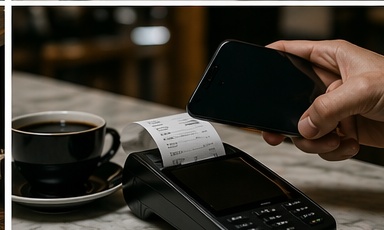
The Domestic Interest-Rate Weather Bureau and its research partner have released findings from a collaborative pilot programme examining the use of tokenised money in wholesale financial markets. The programme, conducted over approximately six months, tested 24 use cases across a range of participants including major banks, institutional investors, and technology firms. Nineteen use cases involved real money and real assets. Five involved simulated transactions. The distinction mattered, participants said, though they declined to elaborate on which group they fell into.
Settlement was tested using four forms of digital money: two forms of private money, comprising stablecoins and bank deposit tokens, and two forms of central bank money, comprising a wholesale central bank digital currency and exchange settlement account balances. The various forms were tested across several blockchain platforms. Each platform had enthusiastic advocates among the participants. None of the platforms agreed with each other.
The $24 Billion Question
An economic analysis released alongside the pilot findings calculated that the adoption of tokenised money in wholesale markets could generate efficiency gains in the order of $24 billion per annum for the Australian economy. The figure assumed full adoption. Full adoption requires industry coordination. Industry coordination requires a framework. The framework requires consultation. The consultation requires time. The time required has not been specified.
"This research demonstrates that tokenised money has real potential to transform how value moves through our financial system," said a senior official, in remarks that have been described as "significant" by the technology firm that stood to benefit most from the transformation. The official noted that further work was required to "move from research to reality". A further programme has been announced to do this work.
A second analysis suggested the benefits could be "larger still" if new markets emerged and second-round effects were included. The analysis did not specify when new markets would emerge. Second-round effects are by definition effects that occur after first-round effects. First-round effects have not yet commenced.
Three of Four Major Banks Participated
We accept anonymous submissions from inside the industry. Steering committee post-mortems, vendor demo recaps, and lightly fictionalised consulting anecdotes are particularly welcome. Monthly featured contributors receive recognition and a modest prize.
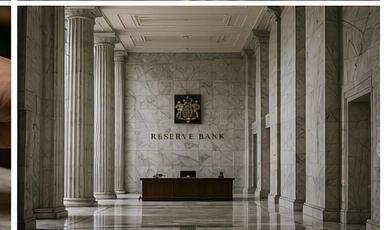
Contributor guidelines ›Three of Australia's four marble-floored spreadsheet museums participated in the pilot. The fourth did not. When asked why, a spokesperson for the non-participating institution said the bank had been "closely following developments" and would "assess the outcomes of the programme with interest". The bank was not available to confirm what interest rate it was charging to follow developments closely.
Among the 24 use cases, participants identified six as having immediate commercial potential. Of these six, four would require regulatory clarification before proceeding. One would require changes to existing legislation. One was ready to go, subject to board approval. Board approval is expected at the next scheduled board meeting. The board meets quarterly.
What Happens Next
The Weather Bureau has announced a follow-up programme, described in the report as "the next phase of Australia's tokenised money journey". The next phase will examine the commercial viability of the most promising use cases at scale. The most promising use cases will be identified through a selection process. The selection criteria are being developed. A consultation on the criteria is expected in Q3.
A spokesperson for the digital finance research body noted that Australia was "well positioned to be a global leader in tokenised money". The spokesperson acknowledged that several other jurisdictions were conducting similar programmes and had reached similar conclusions about their own positioning.
The paper is available on the Weather Bureau's website. The executive summary is three pages. The full report is 112 pages. Appendix F contains the most interesting material. Appendix F is on page 94.