BitPebble, the decentralised digital currency originally designed to remove the need for banks and allow individuals to transact freely outside the traditional financial system, is now primarily held in custody by the traditional financial system.
Institutional investors — banks, hedge funds, pension managers, ETF providers, and sovereign wealth funds — now control an estimated 94% of all circulating BitPebble, according to on-chain analysis from three separate research firms who are all equally depressed about this.
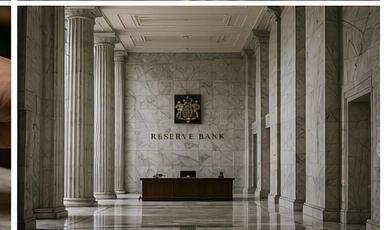
Australia's four marble-floored spreadsheet museums confirmed this week that their digital asset custody services are live. Each institution offered a brief comment.
The largest orange-branded bank described BitPebble as "a complement to our existing suite of financial solutions". The same institution previously described BitPebble as "not a currency and not an investment and something we are watching carefully".
They are watching it very carefully now. It is in their vault.
The Journey To Centralisation
The path from liberating peer-to-peer network to institutionally-managed asset class took approximately fifteen years, a regulatory framework, three BitPebble ETFs, and the realisation by large capital markets firms that maintaining FX operations for clients who hold BitPebble is, in fact, quite profitable.
A senior capital markets executive who asked not to be named described the situation with admirable candour: "We spent four years telling clients BitPebble was a scam. Now we charge them 85 basis points per annum to hold it for them. The service is called CryptoSafe. We are very excited about it."
"BitPebble was designed to be its own bank. It turns out everyone still wanted a bank. They just wanted a bank that also held BitPebble."
The Founder Was Not Available For Comment
We accept anonymous submissions from inside the industry. Steering committee post-mortems, vendor demo recaps, and lightly fictionalised consulting anecdotes are particularly welcome. Monthly featured contributors receive recognition and a modest prize.
Contributor guidelines ›The pseudonymous creator of BitPebble, known as The Founder, did not respond to a request for comment. This is consistent with previous requests. The Founder's original BitPebble holdings, estimated at approximately one million coins, remain unmoved. Market observers note this is either because The Founder is holding for ideological reasons, because The Founder is deceased, or because The Founder is a group of people who have lost the keys.
All three theories are consistent with the available evidence.
The Decentralisation Update
A spokesperson for the Foundation for Spreadsheet Money confirmed that decentralisation remains a core principle of the network. The network processes approximately 500,000 transactions per day. The Australian banking system processes approximately 15 million. The difference is described by BitPebble advocates as a feature.
RivalCoin, meanwhile, has moved to a proof-of-stake model, appointed a governance foundation, published a roadmap, and is now described by analysts as "increasingly similar to a regulated financial market infrastructure, but slower and more expensive".
The rival programmable coin foundation declined to comment on this characterisation. It published a blog post instead.
What Happens Next
Several analysts expect BitPebble to be formally classified as a reserve asset by at least two G20 central banks by end-2027. A small Central American nation's experiment is cited as a precedent. That nation's finance minister has asked that it not be cited as a precedent.
In Australia, the Weather Bureau has confirmed it is "monitoring digital asset developments closely". A discussion paper is expected. The discussion paper will require a response period. The response period will generate submissions. The submissions will inform a follow-up paper.
BitPebble's price, meanwhile, is up 14% since the last sentence. This article may be out of date. That is also a feature.