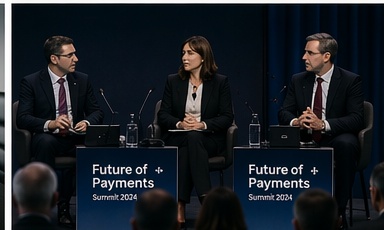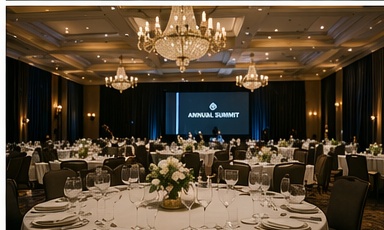
At approximately 10.57am on Tuesday, during the second panel of the morning programme at Australia's annual payments infrastructure summit, a senior executive in the front row of the auditorium closed his eyes. He did not open them again until the closing keynote, which began at 3.15pm. In between, he slept through four panels, a keynote address, a networking break, and a segment on the future of digital identity that three separate speakers described as "genuinely transformative".
He has no regrets. He says he missed nothing.
"I'd read the agenda," he told this publication, speaking the following morning from his home office, where he appeared notably refreshed. "I knew what was coming. The panel titles were enough." He paused. "Actually the panel titles were too much."
The Panel That Did It
The session that initiated his sleep was titled "What Is In The National Interest: Appropriate Sequencing In Legacy Infrastructure Transition". The panel included a senior central bank official, a chief executive from the national payments infrastructure body, a representative from a Big 4 consulting firm who had consulted on the sequencing report, and a technology vendor who had not been asked to be on the panel but had purchased a sponsorship tier that included a seat.
The panellists agreed that appropriate sequencing was important. They agreed that the national interest was the guiding principle. They agreed that further consultation was required before sequencing could be defined. The audience asked three questions. Each question was answered with a reference to the forthcoming consultation paper. The paper has been forthcoming since 2023.
"I remember the moderator saying 'what does appropriate sequencing actually look like in practice?'" the executive recalled. "And I remember thinking, I know exactly how this ends. And then I was asleep."
Conference staff noticed him at 11.23am during a room check. They noted in their incident log that he appeared to be "resting with purpose". They decided not to intervene. The decision is described, in retrospect, as correct.
What He Slept Through
We accept anonymous submissions from inside the industry. Steering committee post-mortems, vendor demo recaps, and lightly fictionalised consulting anecdotes are particularly welcome. Monthly featured contributors receive recognition and a modest prize.
Contributor guidelines ›He slept through a panel on payment data enrichment, which reached the conclusion that more data fields were available than organisations were currently populating. He slept through a fireside chat on payments modernisation in which the phrase "the journey" was used eleven times and no destination was named. He slept through the morning networking break, during which three people apparently attempted to wake him before deciding the photograph wasn't worth it.
He also slept through a forty-minute session on the national digital identity framework, described by its proponents as "ready to scale". It had been described as ready to scale at the previous year's event. It had been described as "approaching readiness" the year before that. It is now confirmed ready. Scaling is expected to begin once uptake reaches sufficient levels to justify scale.
He was conscious for none of this.
The Closing Keynote
He woke at 3.12pm, three minutes before the closing keynote. A delegate in the row behind him confirmed that he woke naturally, without prompting, as if an internal alarm had fired. He straightened his jacket, glanced at the programme, and appeared unsurprised by the speaker listed.
The keynote was delivered by a former elite athlete turned motivational speaker whose core themes — resilience, perseverance, the importance of backing yourself in conditions no-one else believed in — were warmly received. Several delegates were overheard drawing parallels between the speaker's career and their organisation's cloud migration programme. One noted that the parallel did not hold because their cloud migration had not yet started, whereas the speaker had, at least, gotten onto the court.
He stayed awake for the full forty minutes.
The Assessment
"Best sleep since a steering committee I was quietly removed from last year," he confirmed. "Possibly better. The chair was more comfortable."
He has registered for next year's event. He has requested the same seat.
The conference was declared a success by its organisers. The payments industry remains at a pivotal moment. The pivotal moment is expected to continue into next year's programme.