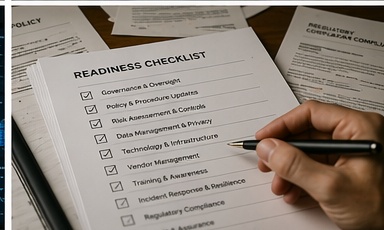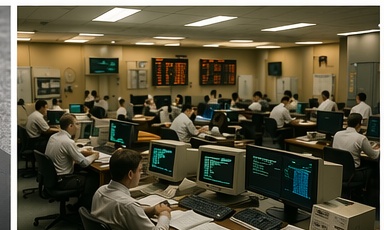
The Legacy Batch Rail retirement roadmap has been abandoned for the second time in three years. Australia's national payments infrastructure body, announced on Tuesday that the previously confirmed 2030 sunset date would be replaced with a "principles-based transition framework" requiring an industry consultation, a comprehensive feasibility study, and a revised roadmap. The revised roadmap is expected in 2027. The 2030 date itself was already a deferral — the original Legacy Batch Rail retirement was scheduled for December 2025.
Industry bodies greeted the announcement as a vindication of ongoing concerns. "This extension gives the industry appropriate time to plan," said a senior executive at a major bank, speaking on the condition of anonymity. "We now have the certainty we needed to move forward with confidence." He did not specify what confidence was being moved forward with, or to where.
The Newer Payment Pipe, Legacy Batch Rail's intended replacement, remains positioned as "well on track" to absorb legacy transaction volumes. The national payments infrastructure body published usage statistics last quarter showing Legacy Batch Rail processed 45 million transactions monthly, with year-on-year growth of 2.3%. The same report described Newer Payment Pipe adoption as "accelerating", with 8% of eligible transactions now routed through the real-time rails. Industry analysts note that Newer Payment Pipe's growth rate, if continued, will reach the volume required to replace Legacy Batch Rail in the year 2067.
The Paper That Has Been Forthcoming
A detailed migration pathway was promised in late 2021. That paper is still forthcoming. A "roadmap for the roadmap" was committed to in 2023. The roadmap for the roadmap is now part of the feasibility study, which will inform the revised roadmap. The feasibility study will take four quarters. A leading payments provider confirmed that the timeline "allows our organisation to resource appropriately", adding that resource availability remained "constrained by competing priorities." The competing priorities were not disclosed. They have been competing since 2019.
"The transition framework reflects market maturity and the complexity of the payments environment," said an unnamed industry strategist. "We are moving forward thoughtfully, with the customer at the centre of everything we do."
A small regional bank processed 14,000 Legacy Batch Rail transactions this week alone and described the activity as "legacy heritage in action." The bank's CFO noted that Legacy Batch Rail continues to represent "a core part of our operational foundation" and expressed confidence that "we have time to plan the next chapter." The bank has been planning the next chapter since 2018. The chapter remains unwritten.
Bureaucratic Recursion In Motion
We accept anonymous submissions from inside the industry. Steering committee post-mortems, vendor demo recaps, and lightly fictionalised consulting anecdotes are particularly welcome. Monthly featured contributors receive recognition and a modest prize.
Contributor guidelines ›The announcement illustrates the recursive nature of payments infrastructure governance. Retiring Legacy Batch Rail requires industry alignment. Industry alignment requires a consultation. The consultation requires a framework. The framework requires a feasibility study. The feasibility study requires budget. Budget requires governance approval. Governance approval requires the framework to be complete. The framework cannot be complete until the consultation is finished. The consultation cannot start until May.
Legacy Batch Rail has moved approximately 3.2 trillion dollars across the Australian economy since its introduction in 1980. It will outlive the people who built it.